Brush Clearing
Home › Services › Brush Clearing
Get back the parts of your property that have quietly stopped being usable.
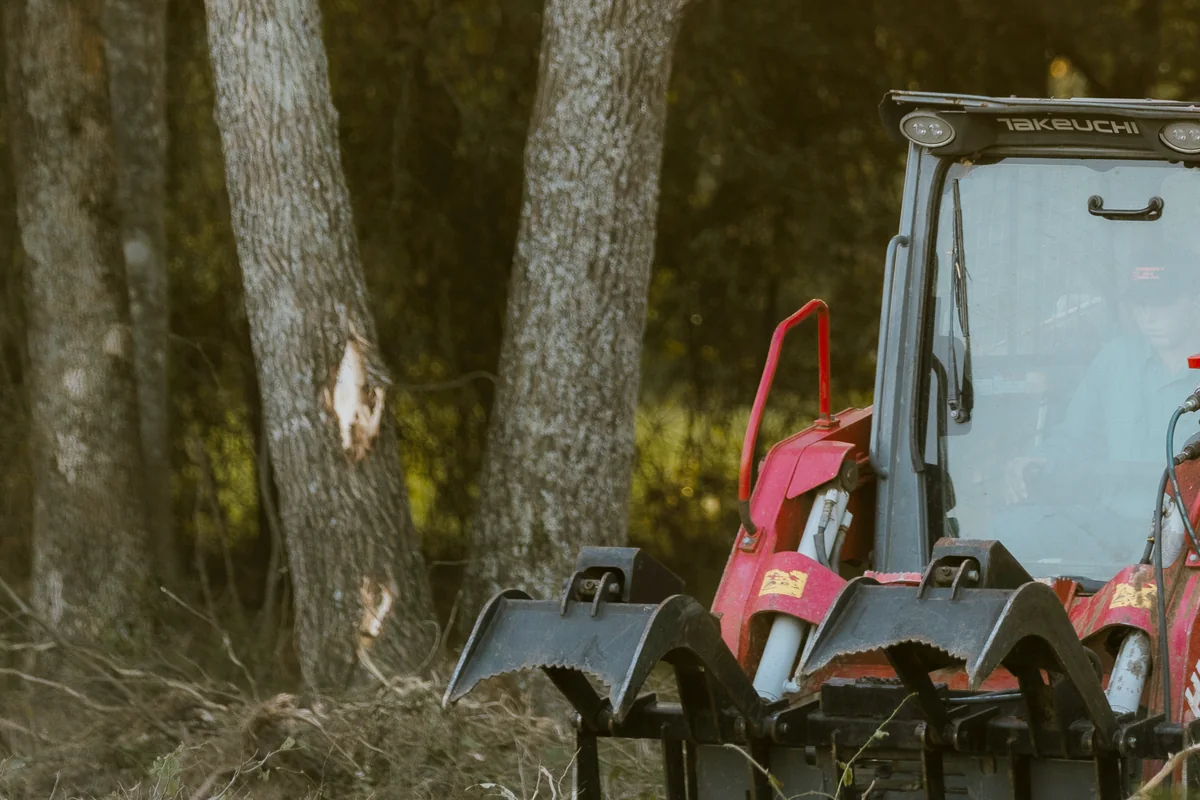
The ground nobody notices losing
Overgrowth does not happen all at once. A fence row gets a little wider every year, the pasture edge creeps in a few feet a season, and the trail to the back of the place gets tighter until one day the truck will not fit down it. Most people do not call about brush the year it becomes a problem. They call three or four years after that, when a chunk of what they own has effectively gone missing.
That is the normal version of this job and it is most of what we clear. Briars, cedar, privet, saplings, honeysuckle, vines, and whatever else moved in while nobody was looking. It is the kind of work that is miserable and slow by hand and straightforward with the right machine on it.
What you get back is usually more than people expect. Ground that was unusable becomes mowable, fence lines become visible and repairable, and the property stops feeling smaller every year.
How we approach it
The first question is always what you want the finished ground to look like, because that decides the method. Clearing to bare dirt, clearing to a mulch layer, and thinning selectively while leaving the good trees are three different jobs with three different prices.
We look at access first. Getting a machine to the work is sometimes the hardest part of the work, particularly on back acreage, behind buildings, or anywhere with a gate, a ditch, or a soft crossing between the road and the job. We would rather find that out standing on the property than the morning we show up with a trailer.
Then it is density, tree size, terrain, and what is hidden in it. Old fence wire is the classic one, and it is worth mentioning before we start rather than after we find it. Slopes, wet ground, stumps, rock, buried lines, and anything you care about keeping all matter and all change how we run the job.
From there the machine choice follows. Most brush work runs off the skid steer with a mulching head or a grapple rake. Heavier material or ground that needs reworking afterward brings in the trackhoe or the dozer.
Where it usually happens
Fence rows are the most common by a wide margin, normally because a fence is about to be rebuilt and nobody can get to the line. Pasture reclamation is close behind, taking back the edges and the thin spots where brush has moved into grazing ground.
After that it is trails and access, opening a route to the back of a property or to a stand, a pond, or a building site. Lots being prepped for a house, shop, or barn. Ditches and drainage that have grown over to the point that water no longer goes where it was supposed to. Hunting ground that needs the understory opened up. And overgrown residential acreage where somebody bought a place that had been sitting for years.
We also handle stump removal, land leveling and grading, pond digging and pond repair, and general dozer work, which tends to come up on the same properties and is usually easier to knock out while we are already there with a machine on the ground.
FAQ
Do I need brush clearing or forestry mulching?
They overlap heavily and often the same machine does both. Mulching describes the method, grinding material in place. Brush clearing describes the goal. When we walk your property we will tell you which approach fits and why.
Can you clear without taking down the mature trees?
Yes. Selective clearing is common and completely normal to ask for. Tell us what you want kept when we walk the property and we will work around it.
Is there anything I should tell you before you start?
Old fence wire, property lines, buried utilities, septic fields, wells, drainage, and anything you want left alone. Anything you already know saves time and avoids damage once we are working.
Tell us what you are looking at
Overgrown acreage, a driveway that keeps washing out, or ground that needs to be ready for something else. Send us the details and we will come look at it.
Get an Estimate